What Is Air Traffic Control?
Air traffic control is the service that keeps aircraft apart and keeps the flow of traffic orderly. In civil aviation it is provided in controlled airspace, and on the ground at aerodromes, by licensed controllers.
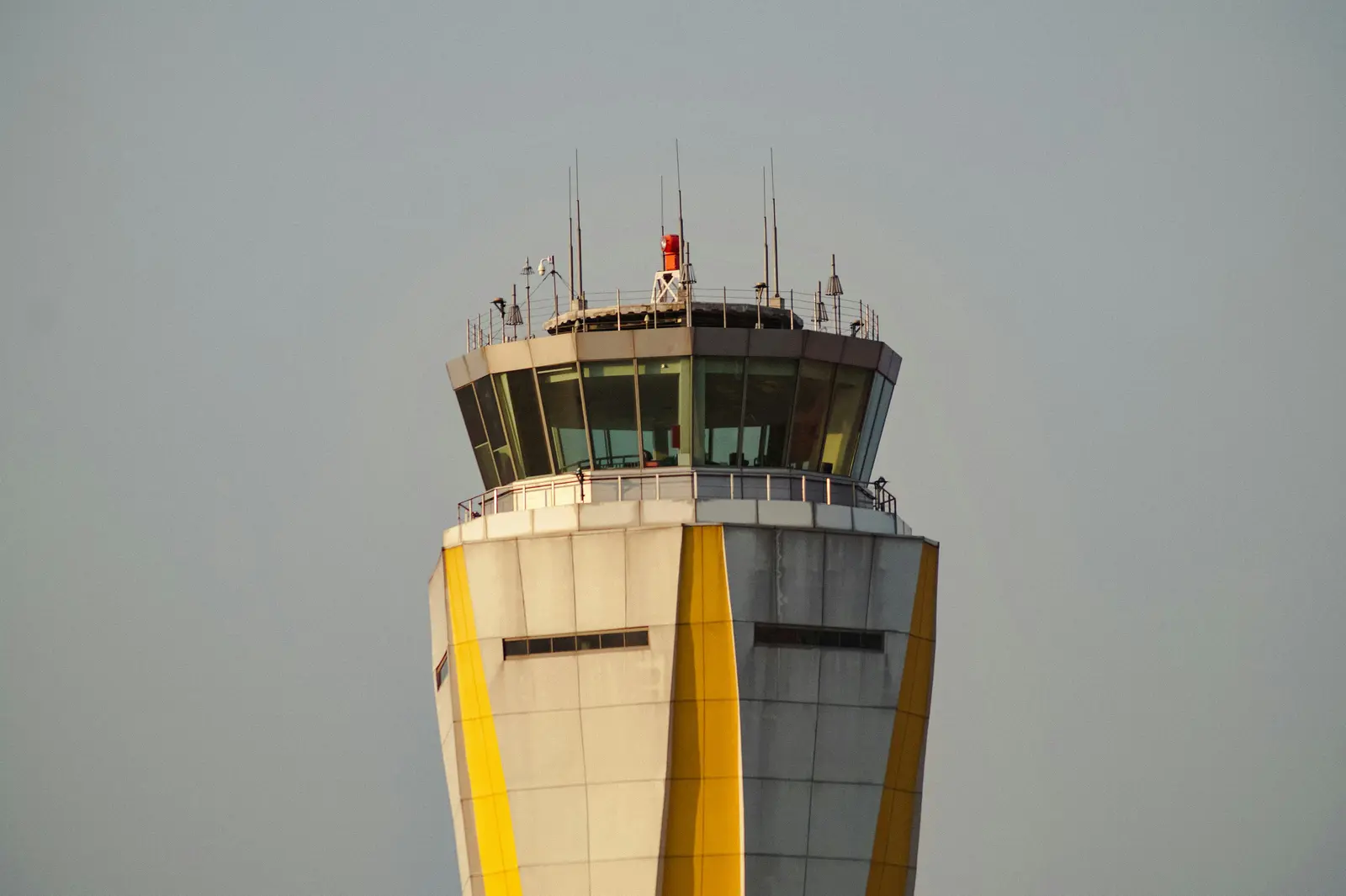
What the service is for
The job of the service is practical. Two aircraft should not occupy the same piece of air, or the same piece of runway, at the same time. Traffic should also keep moving. A safe gap that leaves aircraft holding with no plan is not the point of the work. Controllers prevent collisions and keep the sequence orderly.
That applies in the air and on the aerodrome. On the ground it covers aircraft and vehicles on the runway and taxiway area, not the whole of an airport terminal. In the air it covers the flights that have been cleared into the airspace that unit is responsible for.
Air traffic control is one of the air traffic services. Alongside it, units also pass flight information and start search and rescue alerting when an aircraft is overdue or in difficulty. Those tasks sit next to control. They are not the same thing as separating traffic.
How the work is done
A controller works in real time. The usual tool is the radio. The controller issues clearances and instructions, and pilots read them back. When an aircraft leaves one unit's airspace it is transferred to the next unit, which has already been told the flight is coming. That handoff, from tower to approach, or from one area sector to the next, is a normal part of the hour.
Many units watch the traffic on a surveillance display, fed by radar or by other surveillance systems. Where there is no surveillance cover, the same service can be given procedurally: the controller separates aircraft using pilot reports of position, time, and level, and the rules published for that airspace. The aim does not change. The method does.
The separation to apply is not one number for the whole world. A state publishes the minima for its airspace, and a unit applies the minima for the type of control it provides. A tower, an approach unit, and an area sector do not all use the same figure.
Not all airspace is controlled the same way
States divide the sky into classes. In some classes a flight needs an air traffic control clearance, and the controller is responsible for separating the aircraft that are inside. In other classes the unit provides information, and the pilot remains responsible for seeing and avoiding other traffic.
The boundary is published on charts and in the national aeronautical information. A flight can pass from one class to another on a single route. What the controller may instruct, and what the pilot must ask for, follows the class of the airspace at that moment, not a general idea of "being in contact with air traffic control".
Three parts of the service
Civil air traffic control is commonly divided into three services. The names on a licence vary by country. The split itself is the usual pattern.
- Aerodrome control looks after the runway, the taxiways, and flights in the circuit close to the airport. It is often provided from a control tower, which is why the job is usually called tower control. The controller can see the airfield, or work from a remote tower that shows the same view. The decisions are local: who lands next, who enters the runway, and which aircraft may taxi where.
- Approach control handles arriving and departing flights in the airspace around one or more airports. The task is the sequence into and out of the aerodrome, not the traffic on the taxiways, and not the long en-route sectors. The unit may be in the tower building or in a separate room. That depends on the airport and the employer.
- Area control handles flights en route, across a larger volume of airspace between terminal areas. The work is usually done in an area control centre, divided into sectors. A controller is responsible for the sectors they are checked out on, not for the whole centre.
Not every flight meets all three. A circuit flight can stay with the tower. A short hop may never enter an area sector. An overflight at high level may never speak to the tower it passes. The structure is there so each unit has a defined piece of the flight.
One flight, several units
A typical longer flight shows how the pieces join. The tower clears the aircraft to taxi and then to take off. After departure, the flight is transferred to approach, which climbs it out and points it toward the route. Approach then transfers it to area control, which keeps it separated from other en-route traffic until the descent.
Near the destination the order runs the other way. Area control delivers the flight to the approach unit for that airport. Approach builds the arrival sequence and transfers the aircraft to the tower for the landing and the taxi to stand. Each transfer is a change of responsibility, not a gap. Someone is providing the service for that flight the whole time it is inside controlled airspace.
The licence is tied to a unit
In civil aviation a controller holds a licence issued by a state, a rating for a type of service, and an endorsement for a particular unit. A rating on its own does not authorise every unit of that type. Moving from a tower to an approach unit, or from one centre to another, usually means more training and a new endorsement.
Who provides the service
There is no single worldwide air traffic control service. In a given country the provider may be a government agency, a state-owned organisation, or a company. Military controllers are often recruited and trained separately, and they work to military rules as well as to the civil structure where the two meet.
Well-known civil examples are the Federal Aviation Administration in the United States, NATS in the United Kingdom, and NAV CANADA in Canada. EUROCONTROL provides area control for the Maastricht Upper Area Control Centre, separate from the national providers around it. Other countries have their own providers. An announcement from one of them does not describe the service, or the hiring, at another. Who may apply, and on what terms, is published by that employer. This article describes the service. It does not say whether a particular campaign is open.