
What Is Ground Control?
Ground control is the seat that clears aircraft and vehicles on the taxiways. It does not clear the take-off or the landing. At a busy airport that seat has its own frequency. At a quiet one, the same controller works the taxiways and the runway.
· by Michal Zembol
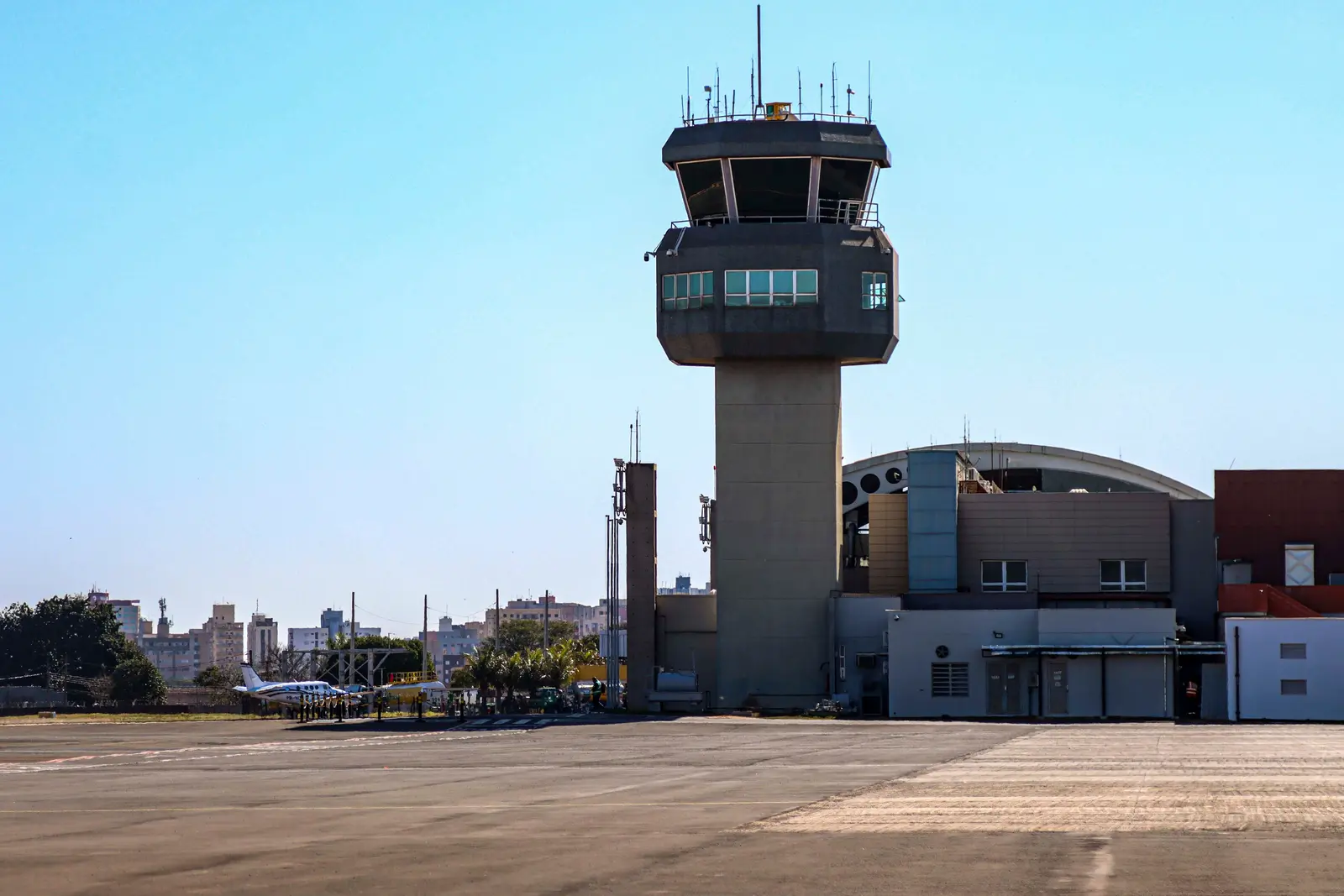
Taxiways, not the runway
Aerodrome control covers the manoeuvring area: the runways and the taxiways. Ground control is the taxiway part of that job. Outbound, the clearance is a route from the edge of the apron to the holding point. Inbound, it is from the runway to the stand, or to the point where an apron service takes the aircraft. The apron itself, where aircraft park, is not always the tower's work.
The runway stays with the other seat. Line up, take off, land, cross, and backtrack are runway clearances. A ground controller does not issue them by taking over the runway frequency. How the whole tower job is split is in aerodrome control.
One frequency, or two
A busy tower splits the work so that taxi instructions do not block the runway. Aircraft and vehicles call ground. The runway controller keeps the runway frequency for the movements that need it. A third position sometimes issues the route clearance before the aircraft taxis, so neither of those frequencies is spent on a long clearance.
A smaller tower often has none of that split. One controller taxis the aircraft and then clears it onto the runway. The name "ground" on a chart, or on a frequency list, is not a promise that a separate person is sitting there.
Where an outbound flight is handed on
A departing aircraft usually speaks to more than one person before it takes off. The route clearance can come first, from a clearance position or from ground. Ground then gives the taxi route as far as the holding point, short of the runway. The aircraft stays there until the runway controller says it may enter. That holding point is the handover. Crossing the line without the runway clearance is the thing the split is there to prevent.
Coming in, the order reverses. The runway controller clears the landing and tells the aircraft where to leave the runway. Once it has left, ground takes it and clears the route toward the stand. If the aircraft has to cross another runway on the way, that crossing goes back to the runway controller. Ground does not lend the runway out.
The route can be given in pieces
At a simple airfield the taxi route is often one clearance: a path, and a hold short of the runway. At a large airport the same clearance would be too long for the frequency, and the picture changes while the aircraft is still moving. Ground then gives the route in stages, up to the next holding point, and continues it when the aircraft gets there.
The pilot reads the clearance back. A wrong taxiway in that readback is caught before the aircraft turns. The frequency is shared with every other aircraft and vehicle on the ground, so the transmission has to be short enough for the next call to get in. How that radio work sits in the hour is in What Does an Air Traffic Controller Do?
Vehicles are traffic
A tug, an inspection vehicle, or a snow plough uses the same taxiways. Ground control clears them, and holds them, against the aircraft that are also taxiing. A vehicle that needs the runway is handed to the runway controller. It enters only when that controller clears it, and it reports when it is clear.
When visibility drops, the airport may limit which taxiways can be used and how aircraft and vehicles move. Those limits are the procedure published for that aerodrome. There is no single visibility figure that every airport uses. The controller applies the one on the board that day.
The licence does not always use this name
States do not all print "ground control" as its own rating. Under the United Kingdom's rules, an instrument aerodrome rating can be narrowed to air control, ground movement control, or tower control, which is both. Two people can hold an aerodrome rating and still not be authorised for the same seat. That list is in Licence, Rating and Unit Endorsement. Another state can use different names for the same split.